

When You Feel Like Roommates Instead of Partners
One of the most common and painful experiences that couples talk about when the intimacy fades is that they feel like roommates instead of partners. Where there was once romance and passion, the partners had become distant and emotionally empty. The chemistry that was there at the beginning of the relationship didn’t just disappear overnight, but it gradually faded, without either partner really understanding why.
Because of this, some couples don’t just feel emotional distance, but they also feel embarrassed, lonely, or even shameful. In our world today, sexual connection is expected, and when couples struggle with intimacy, it can feel isolating, but it’s more common than people often realize.
Understanding a Sexless Marriage
Most people define a sexless marriage as having sex less than 10 times per year or less than once a month. This definition only captures how often the sex is happening and not the emotional impact that this has on a relationship.
A Lack of Sex Can Be a Problem
A lack of sexual intimacy can become a problem when it creates stress for one or both of the partners, such as:
- If both partners are satisfied, it’s not a problem.
- If one or both feel lonely, rejected, or disconnected, it is a big problem.
In order to have a strong emotional connection, there has to be sexual intimacy in a relationship. Without it, some couples feel like something important is missing.
This is More Normal Than You Realize
There are many couples that have been together for a long time who experience little or no sexual intimacy. Research shows that a big percentage of couples fall into this category at one point or another.
The reason that this is important is that it changes the narrative of the relationship. Where one might say, “There’s something wrong with us,” this shows that “This is something that can be worked through and something many couples experience.”
A Sexless Marriage Doesn’t Mean the Relationship is Over
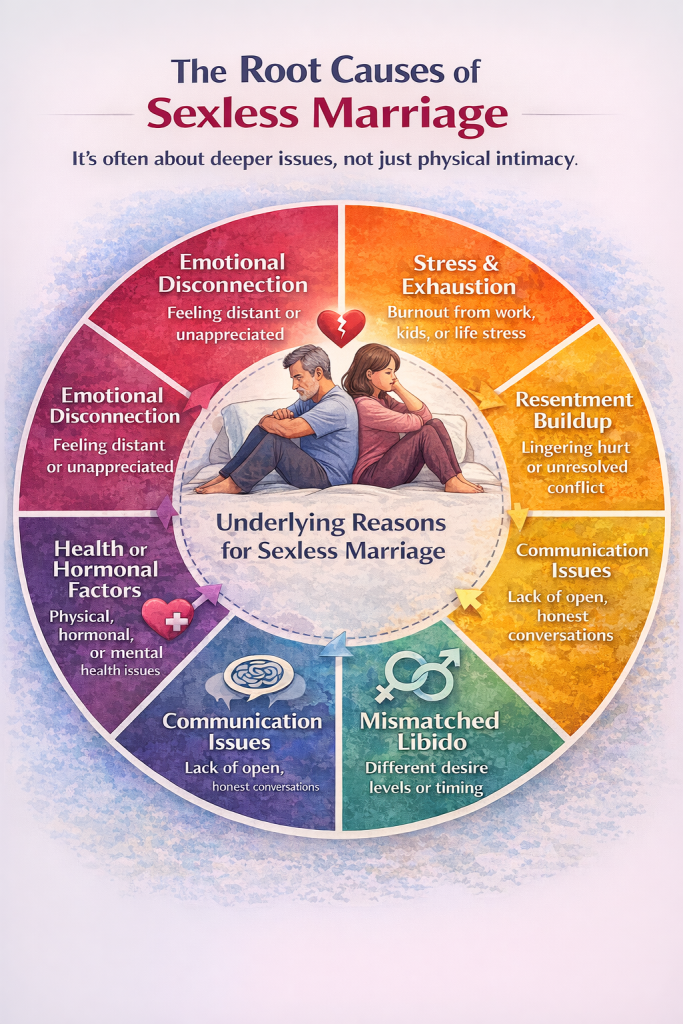
Having a sexless marriage doesn’t mean that the relationship is over, and it’s more of a symptom and not a root of the problem. Here are some common causes for a sexless marriage:
- Health challenges.
- Different attractions.
- Stress.
- Life pressures.
- Resentment or conflict.
- Lack of communication.
- Lack of an emotional connection.
When couples have less of an emotional connection, the physical intimacy often follows this pattern.
The Pattern That Quietly Breaks Intimacy
One of the biggest patterns behind a lack of intimacy in a relationship is what’s often called an avoidant cycle. It usually builds over time without people even realizing it.
How the Pattern Starts
It often begins in a small way, such as:
At first, this might seem like it reduces tension, but it actually creates more distance between the two people.
How Disconnection Grows Over Time
This pattern doesn’t just affect intimacy, but it starts to impact the whole relationship:
- Physical intimacy slows down or stops.
- Affection becomes less frequent.
- Touch starts to disappear.
- Emotional connection weakens.
- The relationship begins to feel distant or routine.
Both partners begin to avoid connection, but for different reasons:
• One is trying to avoid rejection.
• The other is trying to avoid pressure.
Over time, this creates a cycle that’s hard to break without intention.
Is It Possible to Change This Pattern?
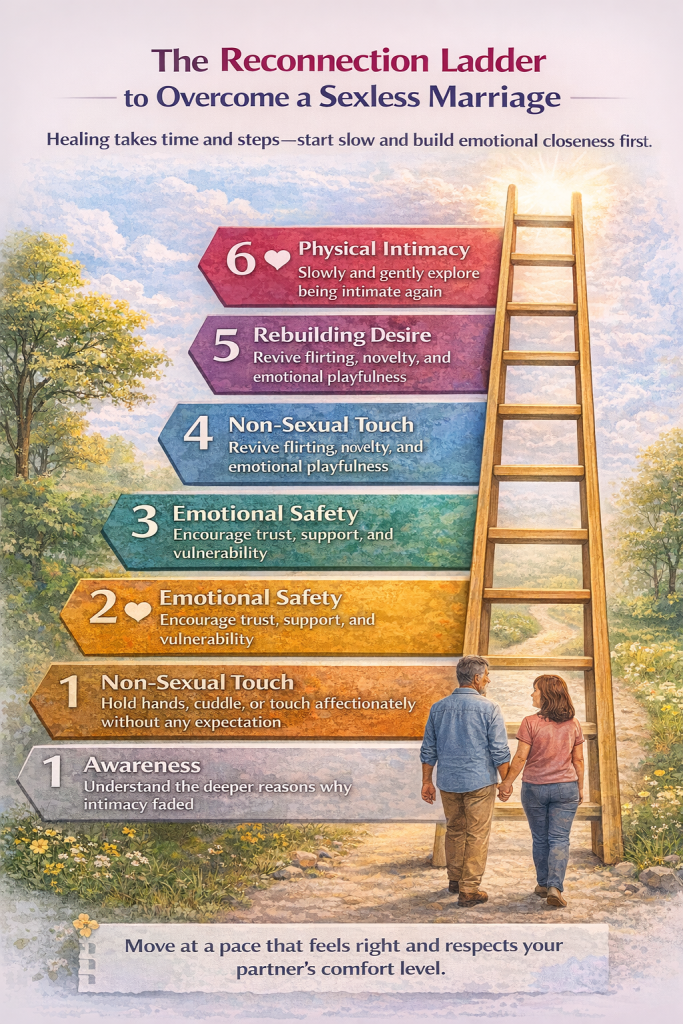
Yes, but it requires a shift in how both people respond to disconnection. Instead of pulling away, the goal is to move toward each other.
Moving From Distance to Partnership
In a healthier dynamic, both partners focus on working together instead of withdrawing. Instead of silence or avoidance, it becomes open communication and understanding.
For example:
• “I want to feel closer. What feels comfortable for you right now?”
• “I do too, I’m just tired, can we spend time together in a different way?”
This creates a connection without pressure and allows both people to feel heard.
Step 1: Rebuild Emotional Connection First
Before focusing on physical intimacy, emotional connection needs to come back first.
Why this matters:
Without emotional closeness, physical connection can feel forced or disconnected.
Ways to rebuild it:
• Talk about your day beyond just responsibilities.
• Practice really listening to each other.
• Show appreciation in small ways.
• Spend intentional time together.
These small efforts help rebuild the foundation of the relationship.
Step 2: Bring Back Safe Physical Touch
In many relationships, touch disappears completely over time.
Why does this happen:
• One partner worries it will lead to pressure.
• The other worries about being rejected.
So, both avoid it altogether.
How to fix it:
Reintroduce physical touch without expectations:
• Hugging.
• Holding hands.
• Sitting close.
• Simple, gentle touch.
This helps rebuild comfort and trust in a natural way.
Why Removing Pressure Can Help
One approach that can really help is taking pressure off intimacy for a period of time.
What does this look like:
Both partners agree to focus on connection without expectations.
Why it works:
• It removes pressure.
• It reduces fear of rejection.
• It makes physical closeness feel safe again.
When pressure is gone, the connection often starts to rebuild naturally.
Step 3: Slowly Rebuild Physical Intimacy
Once emotional connection and comfort with touch return, physical intimacy can start to come back in a more natural way.
There’s no rush, and it’s about rebuilding trust, connection, and understanding over time.
Why Going into Sex Gradually Matters
Going back into sex can feel overwhelming or strange. A better way is to focus on things like:
- Exploration and not pressure.
- Connection and not outcome.
- Comfort and not performance.
Creating a safe and natural way is a way to get intimacy back in a healthy way.
Sensate Focus
Sensate focus is an exercise that can help couples to reconnect in a physical way without being pressured. Senate focus involves:
- Guided touch.
- No expectations of sex.
- A focus on connection.
- A focus on sensations.
These different exercises can help to rebuild physical intimacy in a slow and step-by-step way, so it can be enjoyable for everyone.
Making Small Changes
Rebuilding intimacy doesn’t mean there have to be huge actions. These are some small habits that can help:
- Hugging longer before leaving.
- Sitting closer when talking.
- Being appreciative of each other.
- Creating small connections.
Consistency can help to create the change that is needed to rebuild intimacy.
When to Get Help
If there are patterns that feel ingrained, getting professional support might be helpful. Here’s when to consider professional support:
- The emotional disconnection feels strong.
- Communication is broken.
- There is a pattern of rejection.
- Resentment has built over time.
Therapy can help to give you the tools that you need to break negative patterns and cycles and help to rebuild a connection.
Final Thoughts: A Sexless Marriage Isn’t the End
A sexless marriage isn’t the end, but it can mean that something else needs attention. By going from avoidance to connection and rebuilding closeness, couples can find intimacy in a way that is meaningful and safe.
The goal isn’t just to have sex again, but it’s to rebuild the relationship where both partners feel valued, understood, and connected to each other. True intimacy isn’t just physical, but it’s relational, emotional, and built as time goes on.
Frequently Asked Questions
1. What is considered a sexless marriage?
A sexless marriage is commonly described as a relationship where sexual intimacy happens very rarely, often fewer than 10 times a year or less than once a month. But in real life, the label matters less than how the situation feels to the couple. If one or both partners feel lonely, rejected, disconnected, or emotionally distant, the lack of intimacy may be affecting the relationship in a serious way.
2. Can a sexless marriage really be saved?
Yes, many sexless marriages can be improved when both partners are willing to understand the deeper causes and work toward reconnection. A lack of sex is often a symptom of other issues, such as stress, resentment, emotional distance, or communication breakdown. When those root problems are addressed, intimacy can often return in a more meaningful and lasting way.
3. Does a sexless marriage mean the relationship is over?
No, a sexless marriage does not automatically mean the relationship is over. It usually means that something important in the connection needs attention. For many couples, intimacy fades gradually, not because love is gone, but because life pressures, emotional hurt, or avoidance patterns have built up over time.
4. Why do couples start feeling like roommates instead of partners?
This often happens when emotional closeness begins to fade. Conversations become focused only on responsibilities, affection becomes less frequent, and the relationship starts to feel practical instead of romantic. Over time, the couple may still function as a team, but the warmth, playfulness, and closeness that once defined the relationship begin to disappear.
5. What are the most common causes of a sexless marriage?
Common causes include stress, exhaustion, unresolved conflict, resentment, health concerns, mismatched desire, poor communication, and a lack of emotional connection. Sometimes more than one issue is happening at once, which is why the problem can feel confusing or overwhelming until the couple starts looking beneath the surface.
6. Is a lack of sex always a problem in marriage?
Not always. If both partners feel genuinely content with the level of intimacy, it may not be a problem for that relationship. It becomes a problem when one or both people feel hurt, rejected, distant, unwanted, or emotionally disconnected because of the lack of physical closeness.
7. How does emotional disconnection affect physical intimacy?
Emotional disconnection often makes physical intimacy feel less natural, less safe, or less desired. When partners stop feeling emotionally seen, appreciated, or understood, physical closeness can start to feel forced or empty. In many relationships, rebuilding emotional connection is the first step before sexual intimacy can return comfortably.
8. What is the avoidant cycle in a sexless marriage?
The avoidant cycle happens when both partners begin pulling away, but for different reasons. One may avoid intimacy to escape pressure, while the other avoids reaching out because they fear rejection. As both people withdraw, touch decreases, affection fades, and emotional distance grows, making the cycle harder to break.
9. Why does touch often disappear along with sex?
Touch often disappears because it becomes emotionally loaded. One partner may worry that even a small gesture will be interpreted as a sexual invitation, while the other may avoid touch because they fear being turned away. Over time, even simple forms of affection like hugging, hand-holding, or sitting close may fade out completely.
10. What is the first step to rebuilding intimacy?
The first step is usually rebuilding emotional connection. This means talking more openly, listening with care, showing appreciation, and making time to reconnect outside of routine responsibilities. When emotional safety begins to return, physical closeness often becomes easier and more welcome.
11. Can non-sexual touch help repair a sexless marriage?
Yes, non-sexual touch can be one of the safest and most effective ways to begin reconnecting. Gentle affection such as hugging, holding hands, cuddling, or sitting close can help restore comfort without creating pressure. These small forms of touch remind both partners that closeness does not always have to lead to expectations.
12. Why is removing pressure so important?
Pressure can make intimacy feel stressful instead of connecting. When a partner feels they must perform, respond perfectly, or avoid disappointing the other person, physical closeness can become something they dread. Taking pressure off for a period of time can help rebuild trust, reduce anxiety, and make closeness feel safe again.
13. What does rebuilding intimacy gradually look like?
Gradual rebuilding means focusing on comfort and connection before jumping straight back into sex. It might begin with better conversations, affectionate touch, shared time, and emotional openness. From there, physical intimacy can return step by step, at a pace that respects both partners and avoids creating new pressure.
14. What is sensate focus?
Sensate focus is a gradual reconnection exercise that helps couples rebuild physical closeness without the expectation of intercourse. It encourages guided touch, awareness of physical sensations, and emotional presence. The goal is not performance, but comfort, curiosity, and connection.
15. Can mismatched libido be worked through?
Yes, mismatched libido can often be worked through when both partners communicate honestly and try to understand each other without blame. The goal is not to force identical desire levels, but to find patterns, solutions, and forms of closeness that feel respectful, realistic, and emotionally safe for both people.
16. How can better communication help restore intimacy?
Better communication helps couples talk about what they miss, what they fear, and what feels comfortable right now. Instead of silence, pressure, or assumptions, open conversation creates clarity. When both partners feel heard rather than judged, it becomes easier to rebuild trust and closeness.
17. What small habits can help bring intimacy back?
Small habits can make a big difference over time. These may include hugging a little longer, sitting closer during conversations, expressing appreciation, checking in emotionally, creating moments of affection, and making time for connection that is not only about responsibilities. Consistency matters more than grand gestures.
18. When should a couple seek professional help?
Professional help may be useful when resentment feels deeply rooted, communication keeps breaking down, rejection patterns repeat, or the emotional distance feels too heavy to repair alone. A qualified therapist can help couples understand the cycle they are stuck in and learn healthier ways to reconnect.
19. Can resentment destroy intimacy?
Yes, resentment can quietly damage intimacy over time. When hurt feelings go unresolved, partners may become guarded, critical, avoidant, or emotionally unavailable. Even if the resentment is not always spoken aloud, it can create distance that affects affection, desire, and trust.
20. What is the real goal when trying to save a sexless marriage?
The real goal is not just having sex again. It is rebuilding a relationship where both people feel valued, emotionally connected, safe, understood, and close to each other. Physical intimacy tends to become more meaningful and sustainable when it grows out of that deeper relational foundation.